Small Talk 30 - Interruptions
I don’t put many links in my Small Talk essays, and that’s a deliberate choice. Every time a person sees a link in text, they’re forced to consider whether to click it. Even if they don’t click, that moment of consideration disrupts their flow of reading. I don’t want people’s flow interrupted. I want you to have a pleasant, continuous few minutes of small talk. This is rarer these days than ever, as you’ve probably noticed. So let’s talk about the specific moments that disrupt that continuity. Let’s talk about interruptions.
An interruption is an unexpected, often unwelcome, event that disrupts your present objective. According to that definition, how many interruptions do you encounter every day? Lots, probably. Starting with software, perhaps the most egregious cause of interruptions. Consider your phone apps, and how often your original objective in opening that app is derailed by something the app wants you to do instead. In some categories, it’s almost every time. I won’t trouble you with specific examples—I think we all know what I’m describing, and why it’s so common. Having spent a career involved in interface design, it’s pretty clear to me that true ‘usability’ no longer ranks on the priority list of most software projects. The priority is commerce, and commerce, it seems, thrives on interruptions.
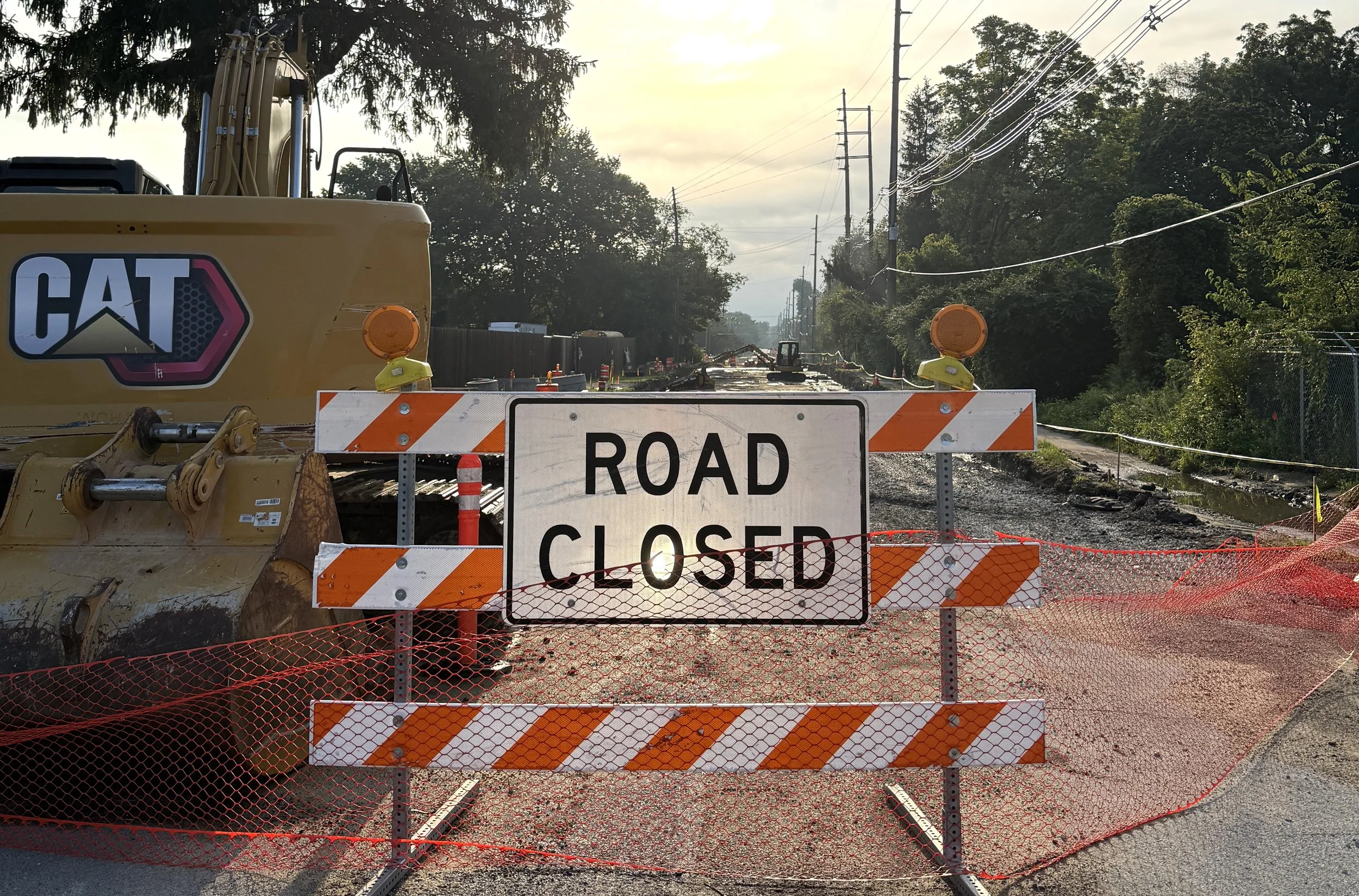
Outside of your phone, interruptions abound. Streaming TV services force you to watch another show before the current one has finished. Construction projects block out miles of road when they’re only working on a small area. Gas-powered leaf blowers wail through your noise-cancelling headphones. If I keep going, this might become a rant, and ranting does not make good small talk. The point is that hundreds of times a day, your present objective is disrupted. It’s worth considering what effect this has on all of us, and what we can do about it.
In 1990, University of Chicago psychology professor Mihály Csíkszentmihályi popularized the concept of flow. He described it as a state of deep concentration and complete absorption in an activity, leading to increased focus, enjoyment, and optimal performance. In flow state, there is an ideal balance between effort and difficulty; we are less self-conscious, we lose track of time. It sounds great because it is. Time in flow state increases your sense of well-being, satisfaction with life, and calmness. And what is the fundamental interference with flow state? An interruption, of course.
Achieving a flow state takes effort. Imagine you want to start a daily practice of drawing. You set out your pad and pencil, you choose a topic, and you start drawing. How soon before you feel pulled toward something else? Something on your phone, most likely, but maybe something happening in the room where you’re drawing. Our minds are interruption machines, trained to switch quickly toward anything that seems urgent or gratifying. As primates, this is one of our superpowers—a nimble, curious mind. But it’s also one of our liabilities. If you want to test this, try to meditate for five minutes. (Here’s a link on that topic, sorry.) You find very quickly that your mind doesn’t naturally rest. It’s constantly interrupting itself.
The internet is loaded with studies that examine how often people at work are interrupted, and how that affects productivity. As a whole, this research is less conclusive than you might expect. But generally, we can assume that a significant interruption (like someone knocking on your doorframe and saying ‘got a sec?’) takes several minutes to recover from, and resume your prior level of concentration. I remember concerns in the late 90s about the threat of email interruptions on your focus. Consider how many sources of interruption we’ve added since then!
Interruption inflation seems related to a reduction in people’s attention spans. Because we are constantly being interrupted—and often seeking interruption—our brain’s ability to sustain concentration has atrophied. Nicholas Carr’s 2010 book, The Shallows, is a fascinating examination of how the internet affects our brains. He was an early observer of the still-current trend where elite college students struggle to read a book. The good news is that our brains, wonderfully plastic, can be ‘rewired’ to achieve sustained focus. Gloria Mark’s 2023 book, Attention Span, is a current take on the problem. Though she’s more of an advocate (if not apologist) for embracing the effect of digital media on our twitchy brains. I suspect this attitude might get you more readers and speaking engagements in Silicon Valley.
And then there’s conversational interruption—when someone starts talking before you’re finished speaking. This isn’t exactly what I set out to examine, but I found some interesting conclusions. People with higher perceived status (e.g., bosses) interrupt more often and are interrupted less. People are more likely to interrupt when they feel insecure, or anxious about losing a thought, or worried about being left behind. Some are terrified by awkward silence. Others are just trying to get an idea out before their interlocutor is interrupted by a phone notification.
Which brings us back to our original notion of interruptions—those clearly unwanted events that disrupt what you’re trying to do. What’s the solution? Is there a way out of our permanent state of being interrupted?
I’m intrigued by a trend among young adults—their migration toward ‘physical media.’ That is, vinyl records, print books, CDs, DVDs, even VHS tapes. It’s worth pointing out what all these things are not: products of a streaming service. When you put a record on your turntable, that’s a very focused and meditative act. The needle goes down, the music plays, and then it’s finished. The record doesn’t immediately start playing another song, or tell you what songs other people are listening to, or what genres you like the most. You can use all this physical media without interruption. And for that, it’s lovely.
So there’s one step we can take: avoid connected media. I say this knowing that you’re reading this on a web page, and mostly likely on your phone. Maybe I should publish a print collection of Small Talk essays, so you can have an undistracted experience. Let me know.
Another, more abstract strategy is to increase our awareness of interruptions, and become more protective about our flow state. You’ve probably heard the expression ‘enshitification,’ which describes the decay and worsening of things, especially online platforms and society as a whole. There’s a good argument that says we are all being trained to lower our standards for acceptable behavior. Perhaps it’s time we all become more vigilant and reject those things that poison our consciousness. Perhaps it’s time we speak up!
Anyway.
One recent morning, while riding my bike through the country, thinking about this very essay, I heard the whistle of a train. The railroad crossing lights began to flash and the gate lowered. It was a freight train, which meant it was going to be a long wait. A long interruption. I could have taken an alternate route, and continued riding, but instead on instinct I waved to the conductor and watched the train go by, and smelled the late-summer fragrance of the fields, and watched swallows diving from telephone lines. It occurred to me that sometimes interruptions are the best part of life. Sometimes these moments shake you out of your trance, and make you look around and witness the movement of things, and the stillness of others.
And so, as autumn arrives here in the northern hemisphere, I wish you hours of flow state, and a few happy interruptions.
Have a good one,
Kipling Knox
See all Small Talks here and share them with your friends!